

For Established, Owner-Led Companies
Websites. Solutions. Partnership.
How these work together in stages:
- Platform Modernization
- Custom Logic & Automation
- Search & Content Authority
- AI Adoption
- Technical Partnership
Partnerships typically start quarterly and extend to annual commitments as the relationship proves its value.
Five Ways We Help B2B & DTC Companies Scale:
Reflect your market leadership in your digital presence and your website becomes the engine and appreciating asset that carries the same authority as your reputation. We guide the infrastructure decisions to make it easier for your customers to buy and more efficient for your teams to operate.
- For Product Companies: Buyers can self-serve 24/7, reorder effortlessly, and manage their account at any hour. Your catalog stays visible and competitive as AI search changes the way buyers find their suppliers.
- For Service Companies: Qualified clients reach out already understanding what you offer, and your team spends hours less on manual intake and quoting. You grow your sales without having to hire more staff.
Best for: Companies who know their website should be doing more for their business. Every day your team picks up the slack, your website isn’t working for your business.
Bridging the gap between standard features and your specific business logic. Shopify Plus is a world-class foundation, but complex operations rarely fit into a standard template. We identify the ideal approach to protect your profit.
- B2B and DTC Theme Builds: Bespoke, high-performance storefronts that deliver tailored user experiences and back office automation.
- Specialized Logic: Customized checkout and theme functionality to reduce app bloat and extend Shopify to match unique rules, pricing models, and workflows.
- Active Catalogs: Professional PDF catalogs and price lists that stay automatically synced with your Shopify store, so sales teams have always-accurate, sales-ready assets. A Shopify app by QCM Media.
- Complex Migrations: Specialized re-platforming to Shopify Plus with the technical scoping, data integrity, and SEO continuity for a seamless transition.
Best for: Companies evaluating a move to Shopify or whose competitive advantage relies on processes that off-the-shelf software cannot handle. The longer your platform limits you, the more it costs in margin and momentum.
The buyers who need you should be able to find you. You have spent years building expertise and a reputation in your industry. Your online presence should reflect that, so when decision makers are ready to buy, your business is the one they find and trust.
- Intent Mapping & Authority Capture: We help you identify the specific problems your best prospects are trying to solve before and when they are ready to buy. By leading with your team’s market expertise, your brand captures the intent that leads to qualified inquiries from the right buyers.
- Visibility as Search Evolves: AI is changing how buyers find their suppliers faster than most businesses are adapting. We position your business for how search works now and where it is heading.
Best for: Leadership teams who want their online visibility to reflect the authority they have already built in their industry. As search continues to change, the businesses that act now will be the ones buyers find first.
Identifying specific operational areas to reduce manual bottlenecks and increase revenue without increasing headcount. There are real, practical uses for AI in B2B and DTC operations that are already proving their value. There are also expensive distractions. We act as a neutral partner to help you identify where AI can genuinely save time and protect margin in your specific business, before committing to anything expensive.
- Where Automation Helps: We identify the specific areas of your operation where automated logic and AI can save hours or generate revenue, starting with changes that prove their value quickly.
- Getting the Foundation Right: Workflow logic is only as good as the data and processes behind it. We assess what you have in place and make sure you are ready before recommending any investment.
Best for: Leadership teams who want honest, practical guidance on automation and AI before committing to expensive builds. The businesses getting the most from AI adoption right now started before it felt urgent.
Your infrastructure becomes more valuable over time instead of going stale. A growing business is never static. New product lines launch, pricing structures evolve, and expectations rise. We are the technical partner in your corner with the ability to keep your business competitive.
- Always Moving Forward: Quarterly planning keeps your operation aligned with where your business is headed so you are consistently working toward your next stage rather than reacting to problems after they surface.
- Strategic Thinking from Day One: Reserved capacity gives you a dedicated partner with the expertise and context to continuously improve. Senior talent means no middle layers with direct access to a technical team as committed to your outcomes as you are.
Best for: Growing companies ready for the kind of infrastructure that enables them to out-serve and out-sell competitors five times their size. The right partnership compounds over time. Starting sooner means more value sooner.
Most established companies face friction in these three areas.
Where We Provide The Most Value
Our partnership works best for companies that are outgrowing their current setup and are ready to invest in what comes next. Most of the businesses we work with contacted us when their reputation and market share had grown so strong that a weak digital presence had become a liability they couldn’t ignore.
Who This is For
Manufacturers & Wholesalers:
Where your rising order volume and operational complexity need a partner who understands the commercial reality behind every technical decision.
Professional Services:
Where the expertise your firm delivers warrants a digital presence that communicates it and a partner who keeps it that way.
Ensuring a Successful Partnership:
To deliver the high-impact results our partnership is known for, we look for a specific type of operational alignment. We may not be the best fit if these apply:
Standardization: You require basic upkeep rather than bespoke evolution.
Cost-Primary: Budget is the primary driver rather than the right fit.
Speed-Driven: You prioritize immediate “quick wins” over long-term stability.
Fixed Workflows: Your processes are set and not open to operational change.
If none of those apply, you are likely the kind of business QCM Media is built for.
What Partnership Produces
These are the kinds of businesses we work with and what ongoing partnership produces. Fourteen years of specialized Shopify Plus and enterprise WordPress experience mean faster decisions and systems designed to scale.
Grow Revenue, Not Overhead
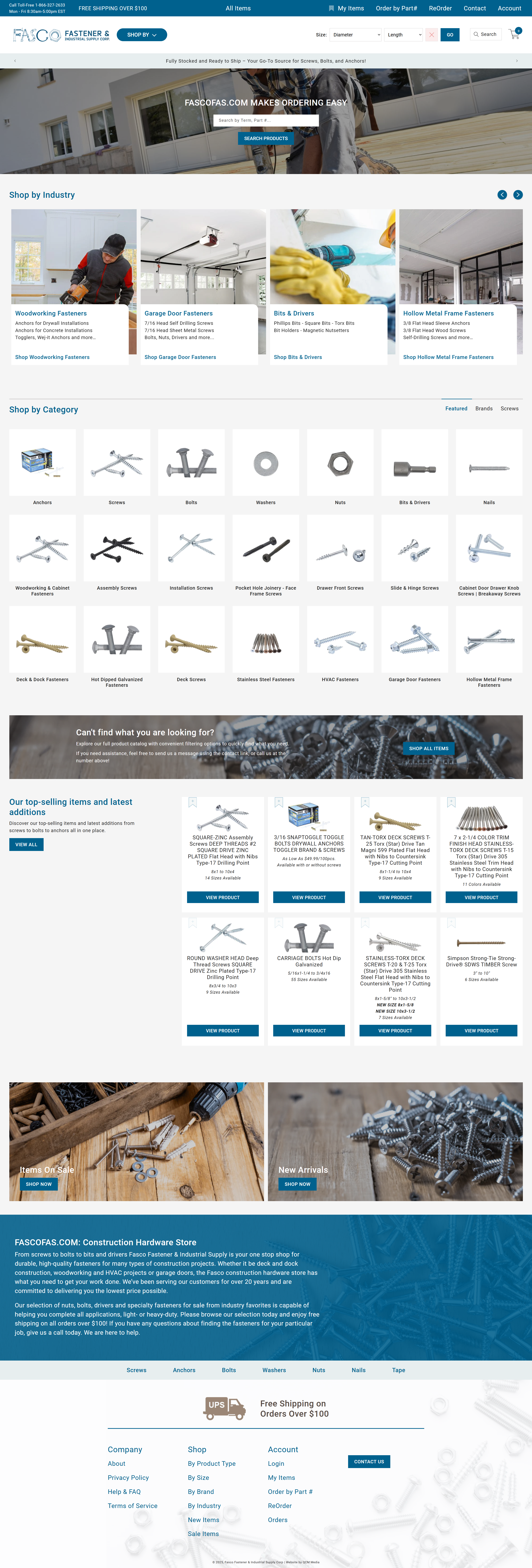
FascoFas Industrial Supply

International Business Associates
What Our Clients Say
“Their team consists of individuals who have a specialty area which I prefer to a team of generalists. They are very flexible and quick to respond to any questions you may have throughout the process ”
“Great at producing new ideas and detailing the pros and cons of each.”
“Our website is a work in progress…it is always changing and we require a team that is very flexible to meet our needs. We have found that in QCM Media.
What Our Clients Say
Practical Perspectives for B2B & DTC Commerce
Commerce never stands still, and the businesses that stay ahead are the ones that keep evolving. These articles are written to help you plan with confidence and navigate the shifts that determine long-term success.
Align Your Systems with the Scale of Your Reputation
When Continuity Becomes the Risk: Why infrastructure built for yesterday limits what comes next
A Framework for Decisions That Stick
Clear Answers to Common Questions
Our team of specialists, led by founder Karen Mollison and UX/UI lead Morgan Mollison, combines operator-led commercial judgment with technical depth and a vetted specialist network. No junior handoffs or intern layers between you and the people doing the work.
It starts with a conversation about your business, where you are, and what you are trying to achieve. From there we identify the best starting point and establish a clear plan before any work begins.
A project has a defined scope and end date. A partnership retainer means reserved capacity and expert thinking applied to your business on an ongoing basis, so the expertise your business needs is available as it evolves. This approach allows you to bypass the cycle of building, breaking, and sourcing an overhaul repeatedly.
Complex B2B & DTC requirements are where we do our best work. The more specific your needs, the more value we tend to provide.
We start from where you are. Whether that means improving what exists or building something new, we assess your current setup first and recommend the clearest path forward.
Absolutely. We regularly serve as an extension of internal teams, providing the reserved capacity and specialized expertise they need to move faster on more complex work.
Practically. We focus on where AI saves real time and protects margin in your specific operation, not on chasing what is making headlines.
It depends on where your business is. In-house makes sense when you need daily oversight of proprietary systems and have the budget for senior talent salaries. A partnership retainer makes sense when you need specialized expertise and predictable costs without the hiring overhead.